Travel & Migration · 2023
Can a model tell whether a household will move?
In our U.S. address records, a household’s earlier moves gave the model its strongest clue.

We wanted to see if a model could tell when a household would move and how far it might go. We used U.S. address records from 2012 to 2019 to compare four outcomes: staying put, moving within a county, moving to another county, and crossing a state line.
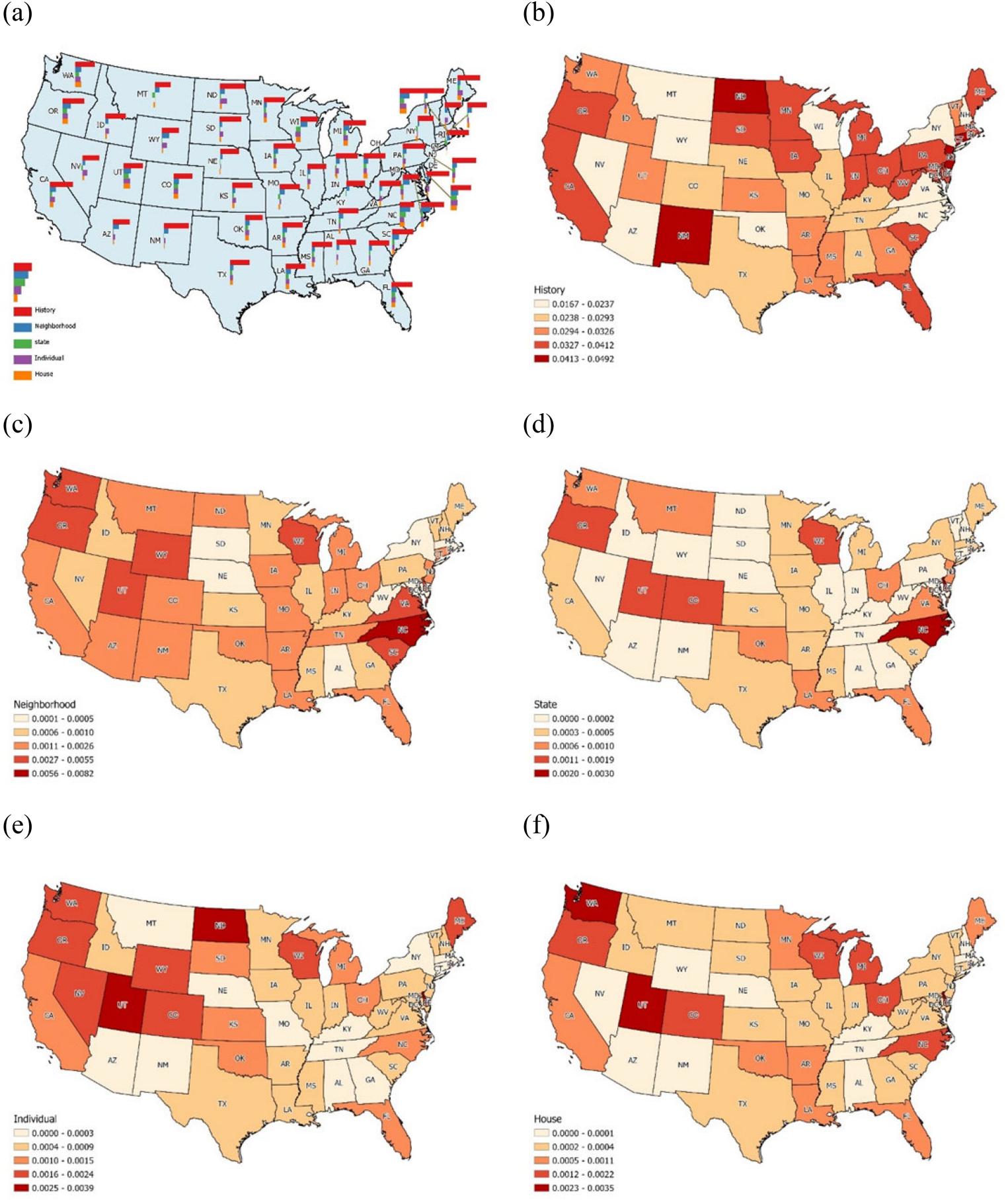
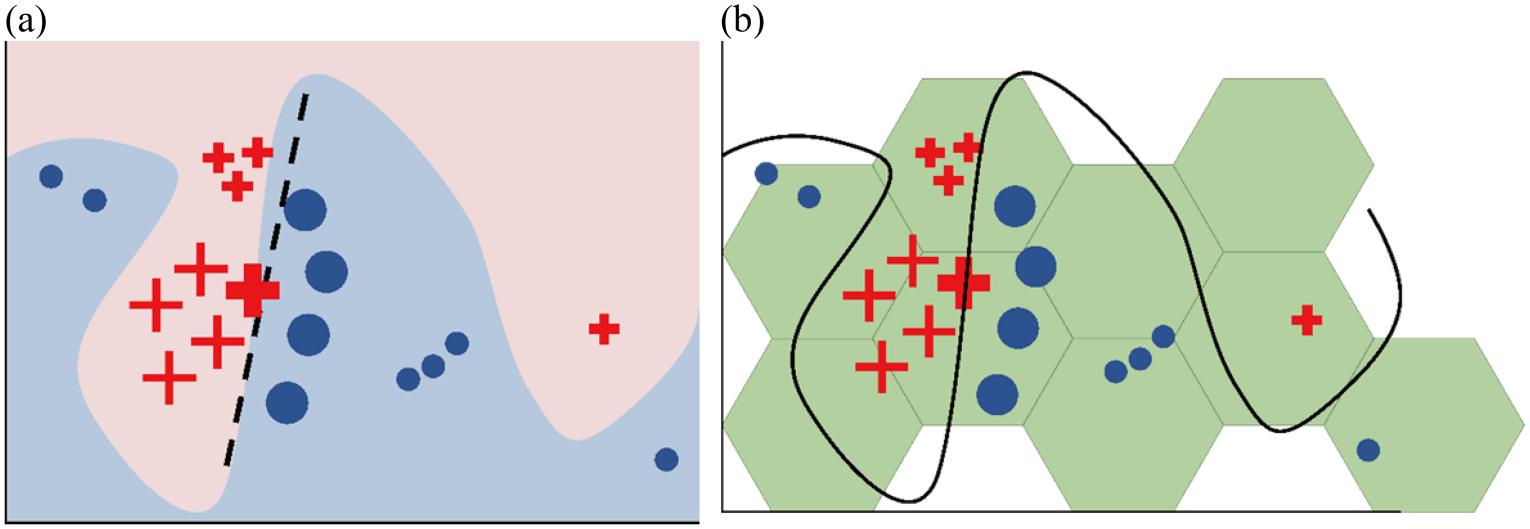
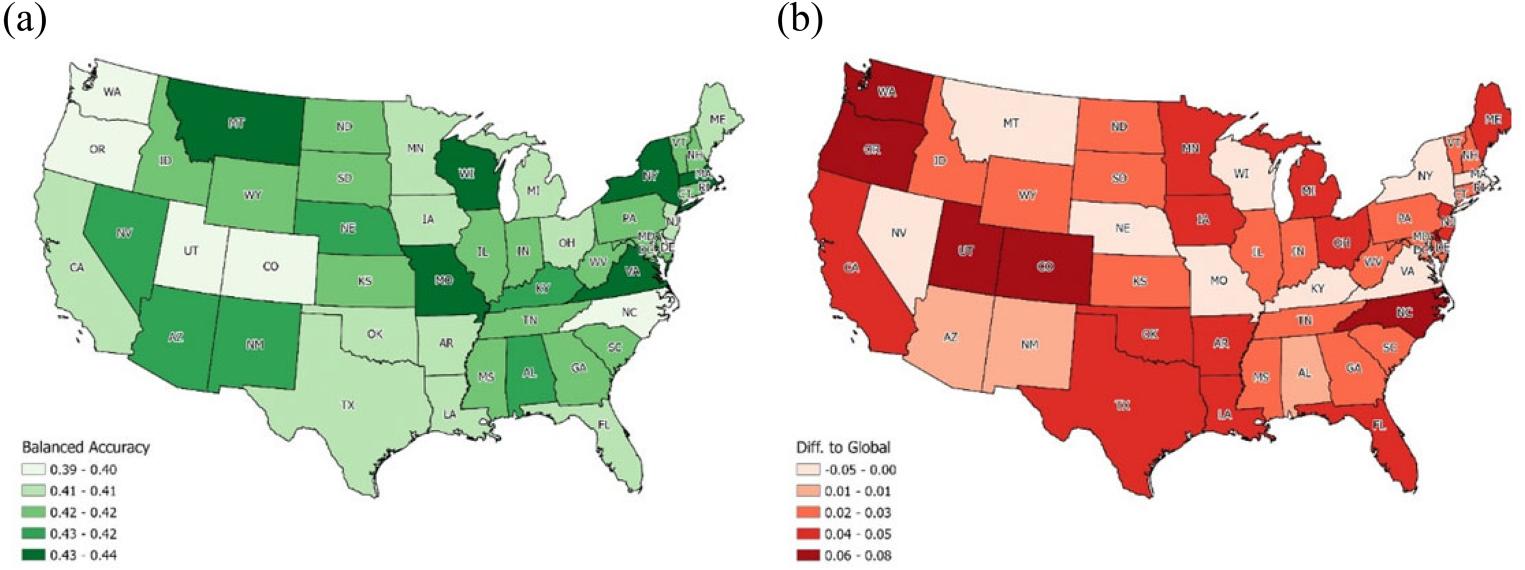
We used GLIME to see what the model relied on in each state. Earlier moves were the strongest clue overall. Some kinds of moves were easier to predict than others, and the model still missed plenty of households that did move.
I’d start with the state-by-state results below. They show where a national average can be misleading. I’d need to ask households about their decisions to learn why a past move might matter.
More figures from the paper
The original paper
Predicting households’ residential mobility trajectories with geographically localized interpretable model-agnostic explanation (GLIME)
International Journal of Geographical Information Science, 37(12), 2597–2619